Why people come here
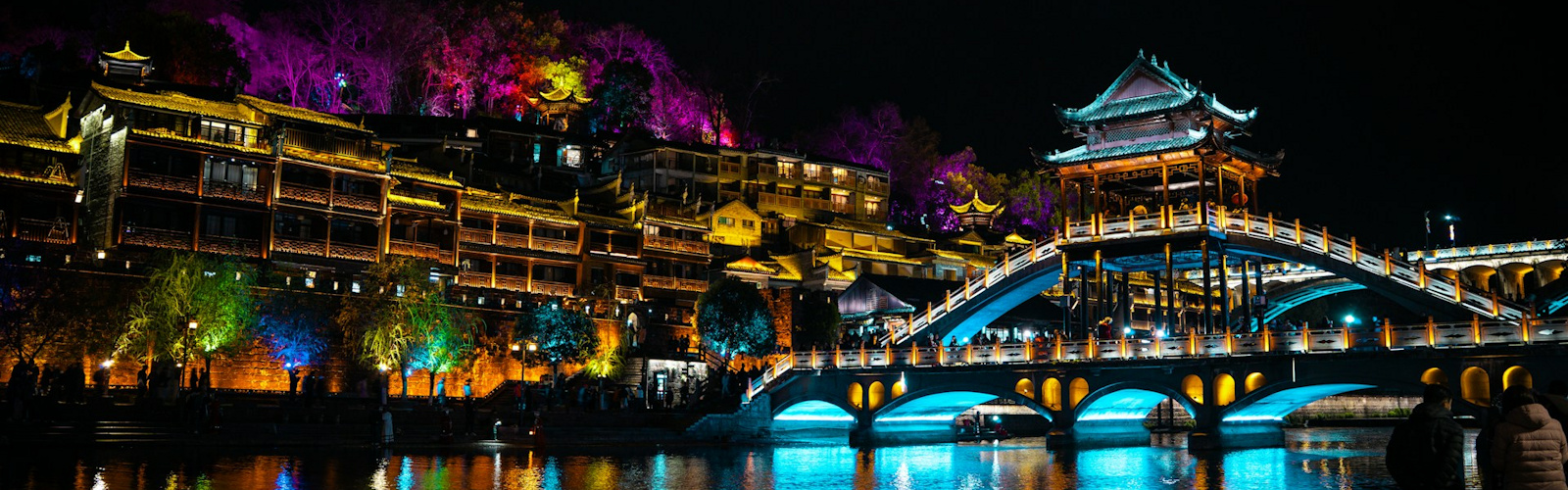
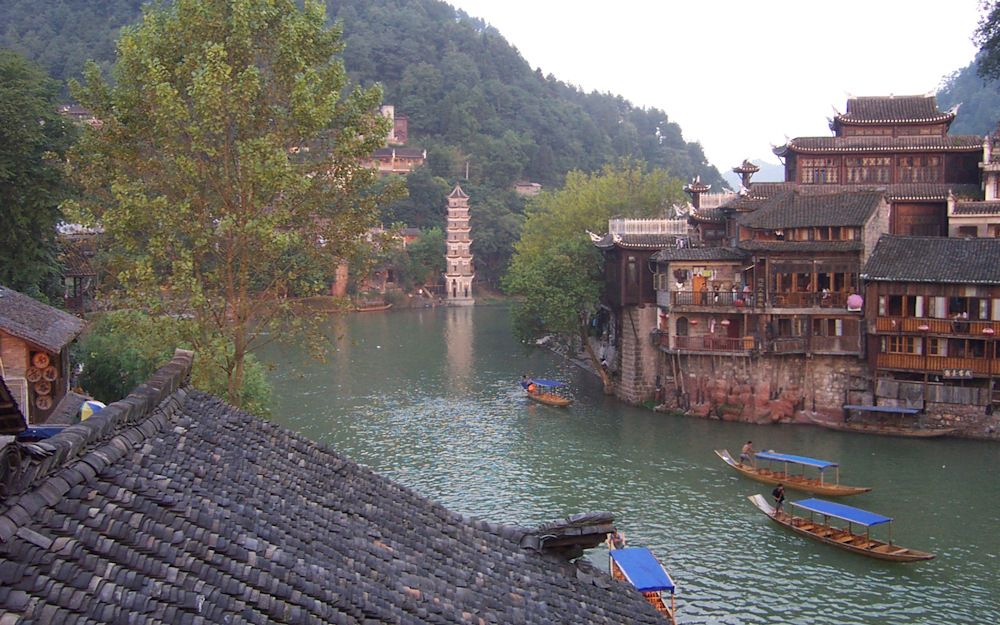
Fenghuang — the name means "Phoenix" — grew up along the banks of the Tuo River as a walled garrison town, and much of its old core survives: narrow stone streets, timber shopfronts, and rows of diaojiaolou, wooden stilt houses that lean out directly over the water on wooden posts. The town is historically home to Miao and Tujia communities alongside Han Chinese residents, and it's the birthplace of the early 20th-century writer Shen Congwen, whose novels are largely set in and around it.
Unlike some restored "ancient towns" elsewhere in China, Fenghuang still functions as an actual town — people live in the houses along the river, not just staff the souvenir stalls in them — though the old quarter has, unsurprisingly, leaned hard into tourism.
What to actually do
- Walk the riverbank after dark. Red lanterns strung along both banks of the Tuo River reflect in the water — the single most photographed sight in town, and worth the wait until evening.
- Cross Rainbow Bridge (Hong Bridge). A covered bridge lined with small shops, doubling as both crossing and market — good for people-watching more than shopping.
- Climb the North Gate Tower. Part of the old town wall, offering a rooftop view back down over the stilt houses and river.
- Take a bamboo raft on the Tuo River. A slower, waterline view of the diaojiaolou houses than you get from the banks.
Fenghuang is a full day-trip destination on its own from most of Hunan, so the most common regret is treating it as a quick stop — stay a night if your schedule allows it at all.
Getting there
The nearest rail hub is Jishou, roughly 40 minutes away by road, connected to Changsha by high-speed rail. From Jishou station, buses and taxis run directly into Fenghuang's old town. There's also a small regional airport nearby with limited domestic connections.